
Loss Control
Proactive risk identification and remediation, embedded into everyday insurance workflows
Loss Control
Proactive risk identification and remediation, embedded into everyday insurance workflows
Loss Control
Proactive risk identification and remediation, embedded into everyday insurance workflows
Commercial loss control is still largely reactive. Small and mid-sized businesses lack self-service tools to identify and remediate risks early. Underwriters and risk teams lack real-time visibility into current conditions. Risk insights are fragmented across departments and systems.
Crosstie’s Loss Control Automation connects policyholders, loss control consultants, and internal loss control teams through one configurable platform. By combining digital inspections, policyholder self-service, and AI-driven risk intelligence, Crosstie helps organizations surface risk earlier, guide remediation faster, and shift loss control from point-in-time inspections to a more continuous, proactive process.
Modernize loss control with proactive intelligence and policyholder self-service.
The Crosstie Platform Advantage
Current Workflow
Current Workflow
With Crosstie
With Crosstie
What This Means for Your Team
What This Means for Your Team
Loss control surveys, inspections, and remediation efforts are manual, fragmented, and difficult to track across systems and teams
A single, configurable loss control experience that coordinates inspections, captures hazards digitally, and tracks remediation progress across policyholders, consultants, and internal teams
Clearer visibility into risk conditions, fewer manual follow-ups, and a more consistent path from inspection to remediation
Loss control surveys, inspections, and remediation efforts are manual, fragmented, and difficult to track across systems and teams
A single, configurable loss control experience that coordinates inspections, captures hazards digitally, and tracks remediation progress across policyholders, consultants, and internal teams
Clearer visibility into risk conditions, fewer manual follow-ups, and a more consistent path from inspection to remediation
Policyholders have limited tools to understand risks or resolve findings independently, leading to delays and incomplete remediation
A policyholder self-service portal that guides remediation, collects evidence, and tracks progress in real time
Faster remediation cycles and less back-and-forth with policyholders
Policyholders have limited tools to understand risks or resolve findings independently, leading to delays and incomplete remediation
A policyholder self-service portal that guides remediation, collects evidence, and tracks progress in real time
Faster remediation cycles and less back-and-forth with policyholders
Loss control teams rely on static reports, spreadsheets, or disconnected systems to monitor outstanding items and emerging risks
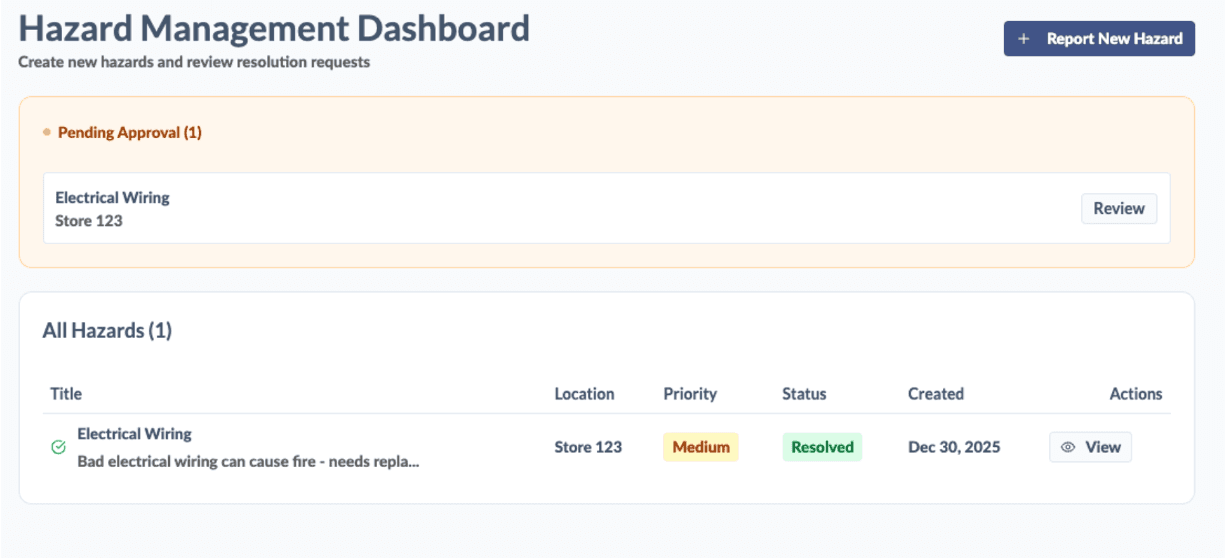
A centralized loss control dashboard that surfaces outstanding items, remediation status, and updates across all inspections and locations
Improved oversight, easier prioritization, and less manual tracking across programs and portfolios
Loss control teams rely on static reports, spreadsheets, or disconnected systems to monitor outstanding items and emerging risks
A centralized loss control dashboard that surfaces outstanding items, remediation status, and updates across all inspections and locations
Improved oversight, easier prioritization, and less manual tracking across programs and portfolios
Why Our Approach Works

Built for Insurance Risk Workflows
Crosstie’s platform is purpose-built for insurance operations, not generic survey or checklist tools. Loss control workflows reflect how carriers, TPAs, and risk teams actually operate, from inspection scheduling through remediation tracking and approval.

Policyholder Self-Service by Design
Policyholders are active participants in risk mitigation. Crosstie gives them clear, guided tools to understand findings, submit evidence, update status, and resolve issues independently, reducing friction and administrative burden for internal teams.

Centralized Visibility for Loss Control Teams
Loss control teams track outstanding items, remediation progress, and inspection updates in one centralized portal. AI-assisted findings surface directly within the hazard management dashboard to help teams prioritize follow-ups and focus attention where risk indicators are present. AI-assisted review supports identification of common risk conditions such as fall hazards, improper ladder use, obstructed work areas, unsecured access points, and incomplete PPE compliance.

Configurable Without Custom Development
Configure surveys, checklists, remediation workflows, alerts, and approval rules without custom builds. Programs can evolve quickly as risk strategies change while IT maintains governance and control.
Business Teams Configure, IT Stays in Control
No-code configuration allows teams to update workflows, content, rules, and communications without new software releases, while IT maintains governance, security, and integrations.
Seamless Integration with Core Systems
Integrate via secure APIs, managed file exchange, webhooks, or iFrame. Loss control data can be shared with underwriting and risk systems without replacing existing infrastructure.
Why Our Approach Works
Built for Insurance Risk Workflows
Crosstie’s platform is purpose-built for insurance operations, not generic survey or checklist tools. Loss control workflows reflect how carriers, TPAs, and risk teams actually operate, from inspection scheduling through remediation tracking and approval.
Policyholder Self-Service by Design
Policyholders are active participants in risk mitigation. Crosstie gives them clear, guided tools to understand findings, submit evidence, update status, and resolve issues independently, reducing friction and administrative burden for internal teams.
Centralized Visibility for Loss Control Teams
Loss control teams track outstanding items, remediation progress, and inspection updates in one centralized portal. AI-assisted findings surface directly within the hazard management dashboard to help teams prioritize follow-ups and focus attention where risk indicators are present. AI-assisted review supports identification of common risk conditions such as fall hazards, improper ladder use, obstructed work areas, unsecured access points, and incomplete PPE compliance.
Configurable Without Custom Development
Configure surveys, checklists, remediation workflows, alerts, and approval rules without custom builds. Programs can evolve quickly as risk strategies change while IT maintains governance and control.
Business Teams Configure, IT Stays in Control
No-code configuration allows teams to update workflows, content, rules, and communications without new software releases, while IT maintains governance, security, and integrations.
Seamless Integration with Core Systems
Integrate via secure APIs, managed file exchange, webhooks, or iFrame. Loss control data can be shared with underwriting and risk systems without replacing existing infrastructure.
Why Our Approach Works
Built for Insurance Risk Workflows
Crosstie’s platform is purpose-built for insurance operations, not generic survey or checklist tools. Loss control workflows reflect how carriers, TPAs, and risk teams actually operate, from inspection scheduling through remediation tracking and approval.
Policyholder Self-Service by Design
Policyholders are active participants in risk mitigation. Crosstie gives them clear, guided tools to understand findings, submit evidence, update status, and resolve issues independently, reducing friction and administrative burden for internal teams.
Centralized Visibility for Loss Control Teams
Loss control teams track outstanding items, remediation progress, and inspection updates in one centralized portal. AI-assisted findings surface directly within the hazard management dashboard to help teams prioritize follow-ups and focus attention where risk indicators are present. AI-assisted review supports identification of common risk conditions such as fall hazards, improper ladder use, obstructed work areas, unsecured access points, and incomplete PPE compliance.
Configurable Without Custom Development
Configure surveys, checklists, remediation workflows, alerts, and approval rules without custom builds. Programs can evolve quickly as risk strategies change while IT maintains governance and control.
Business Teams Configure, IT Stays in Control
No-code configuration allows teams to update workflows, content, rules, and communications without new software releases, while IT maintains governance, security, and integrations.
Seamless Integration with Core Systems
Integrate via secure APIs, managed file exchange, webhooks, or iFrame. Loss control data can be shared with underwriting and risk systems without replacing existing infrastructure.
Platform Capabilities
For Loss Control Consultants
Create and manage surveys, checklists, and hazard reporting workflows
Schedule and conduct digital inspections
Receive alerts and reminders for outstanding inspections or remediation items
Review submitted evidence and approve or deny resolutions
Generate inspection reports instantly without manual compilation
For Loss Control Teams
Track outstanding items and remediation status within a centralized portal
Review inspection updates and policyholder submissions in real time
Leverage AI-assisted review of submitted evidence to surface potential hazards
Prioritize follow-ups based on identified risk indicators and outstanding exposure
For Policyholders
Complete inspections digitally through guided experiences
Submit photos, videos, and documentation as evidence
Update remediation status with comments and supporting files
Track open and resolved items in real time

Platform Capabilities
For Loss Control Consultants
Create and manage surveys, checklists, and hazard reporting workflows
Schedule and conduct digital inspections
Receive alerts and reminders for outstanding inspections or remediation items
Review submitted evidence and approve or deny resolutions
Generate inspection reports instantly without manual compilation
For Loss Control Teams
Track outstanding items and remediation status within a centralized portal
Review inspection updates and policyholder submissions in real time
Leverage AI-assisted review of submitted evidence to surface potential hazards
Prioritize follow-ups based on identified risk indicators and outstanding exposure
For Policyholders
Complete inspections digitally through guided experiences
Submit photos, videos, and documentation as evidence
Update remediation status with comments and supporting files
Track open and resolved items in real time
Real-World Applications
SMB Risk Self-Assessment
Policyholders complete digital inspections independently, guided by structured checklists and evidence submission, reducing reliance on manual site visits for lower-risk accounts.
SMB Risk Self-Assessment
Policyholders complete digital inspections independently, guided by structured checklists and evidence submission, reducing reliance on manual site visits for lower-risk accounts.
SMB Risk Self-Assessment
Policyholders complete digital inspections independently, guided by structured checklists and evidence submission, reducing reliance on manual site visits for lower-risk accounts.
Consultant-Led Inspections
Loss control consultants conduct digital inspections with automated scheduling, real-time hazard capture, and instant report generation.
Consultant-Led Inspections
Loss control consultants conduct digital inspections with automated scheduling, real-time hazard capture, and instant report generation.
Consultant-Led Inspections
Loss control consultants conduct digital inspections with automated scheduling, real-time hazard capture, and instant report generation.
Underwriting Risk Visibility
Underwriters access current risk conditions, remediation status, and hazard trends to inform pricing, segmentation, and renewal decisions.
Underwriting Risk Visibility
Underwriters access current risk conditions, remediation status, and hazard trends to inform pricing, segmentation, and renewal decisions.
Underwriting Risk Visibility
Underwriters access current risk conditions, remediation status, and hazard trends to inform pricing, segmentation, and renewal decisions.
Ongoing Risk Monitoring
Risk signals are monitored continuously, enabling proactive outreach and intervention before incidents occur.
Ongoing Risk Monitoring
Risk signals are monitored continuously, enabling proactive outreach and intervention before incidents occur.
Ongoing Risk Monitoring
Risk signals are monitored continuously, enabling proactive outreach and intervention before incidents occur.
Proven Value You Can Measure
Reduced manual coordination for inspections and remediation
Reduced manual coordination for inspections and remediation
Reduced manual coordination for inspections and remediation
Faster turnaround from inspection to documented resolution
Faster turnaround from inspection to documented resolution
Faster turnaround from inspection to documented resolution
Improved visibility into current risk conditions across portfolios
Improved visibility into current risk conditions across portfolios
Improved visibility into current risk conditions across portfolios
Increased policyholder engagement in risk mitigation efforts
Increased policyholder engagement in risk mitigation efforts
Increased policyholder engagement in risk mitigation efforts
One configurable platform instead of disconnected survey tools and spreadsheets
One configurable platform instead of disconnected survey tools and spreadsheets
Purpose-built for P&C insurance with the flexibility to evolve as programs mature
Purpose-built for P&C insurance with the flexibility to evolve as programs mature
Purpose-built for P&C insurance with the flexibility to evolve as programs mature

Move loss control from reactive inspections to proactive risk management.
Move loss control from reactive inspections to proactive risk management.
Move loss control from reactive inspections to proactive risk management.
Menu
Formerly Gain Life